











⚡ CliffGuard vs. the Rest:
Our Unique Strengths
Organizations rely on AWS, Microsoft Azure, Google Cloud, SaaS integrations, APIs, and cloud workloads to run critical business services. Misconfigurations, excessive privileges, exposed services, weak segmentation, insecure APIs, credential abuse, and weak trust relationships can create exploitable attack paths across modern cloud environments and increase the risk of unauthorized access, data exposure, and operational disruption.
CliffGuard’s Cloud Penetration Testing Services simulate realistic attacks against cloud infrastructure, identities, applications, and services to identify exploitable weaknesses, validate security controls, demonstrate business impact, and prioritize remediation across enterprise cloud environments. Testing combines cloud-specific attack techniques with controlled exploitation to provide practical evidence of how security weaknesses could affect critical business assets.
Cloud Penetration Testing is an authorized security assessment that simulates realistic attacker techniques against cloud environments to identify vulnerabilities, misconfigurations, excessive permissions, insecure services, and exploitable trust relationships. It focuses on demonstrating which weaknesses are genuinely exploitable rather than reporting configuration findings alone.
Testing evaluates cloud identities, control planes, networks, workloads, storage, APIs, serverless services, and security configurations to determine whether weaknesses can be chained into meaningful compromise across cloud accounts, applications, data, and connected enterprise services.
CliffGuard combines cloud attack-surface discovery, IAM testing, exploitation, privilege escalation, attack-path validation, and retesting to provide evidence-based insight into real cloud security risk and support targeted remediation decisions.
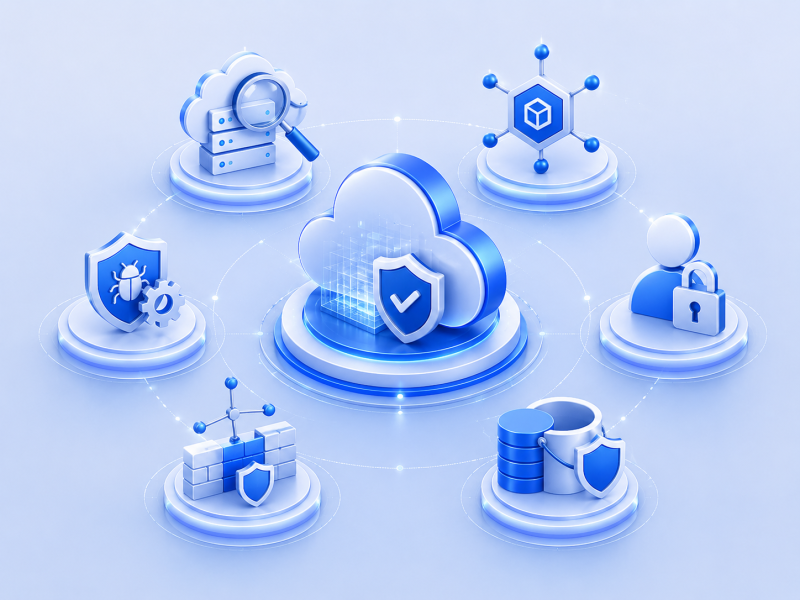
☁️ Multi-Cloud & Hybrid Testing – Assess AWS, Azure, Google Cloud, private cloud, and connected hybrid environments.
🔐 IAM & Privilege Testing – Validate users, roles, policies, federation, service accounts, tokens, and escalation paths.
🧩 Network & Workload Testing – Assess segmentation, virtual machines, containers, Kubernetes, serverless services, and lateral movement.
📂 Storage, Data & Secrets Testing – Identify public exposure, weak encryption, insecure backups, embedded credentials, and uncontrolled access.
🔗 API & Control-Plane Testing – Test management APIs, metadata services, cloud consoles, integrations, keys, and administrative interfaces.
🎯 Attack-Path & Detection Validation – Chain weaknesses and verify whether cloud telemetry, alerts, and defensive controls respond effectively.
Define authorized testing boundaries and identify cloud accounts, subscriptions, projects, identities, workloads, storage, networks, APIs, management interfaces, and internet-facing resources. Map trust relationships, data flows, administrative paths, and critical business assets.
Analyze public services, IAM permissions, security groups, storage policies, application endpoints, secrets, metadata services, and cross-account relationships. Identify weaknesses that may enable initial access, credential theft, unauthorized data access, or control bypass.
Safely exploit approved cloud weaknesses to validate exposed services, insecure configurations, vulnerable workloads, weak authentication, credential misuse, and unauthorized resource access. Testing is carefully controlled to protect availability and business operations.
Chain validated weaknesses to assess privilege escalation, lateral movement, persistence, cross-account access, data exposure, and control-plane compromise. Determine how far an attacker could progress and which critical assets could be affected.
Deliver validated findings, attack evidence, risk ratings, affected resources, and cloud-specific remediation guidance. Retest corrected weaknesses to confirm fixes, remove attack paths, and provide updated security status.
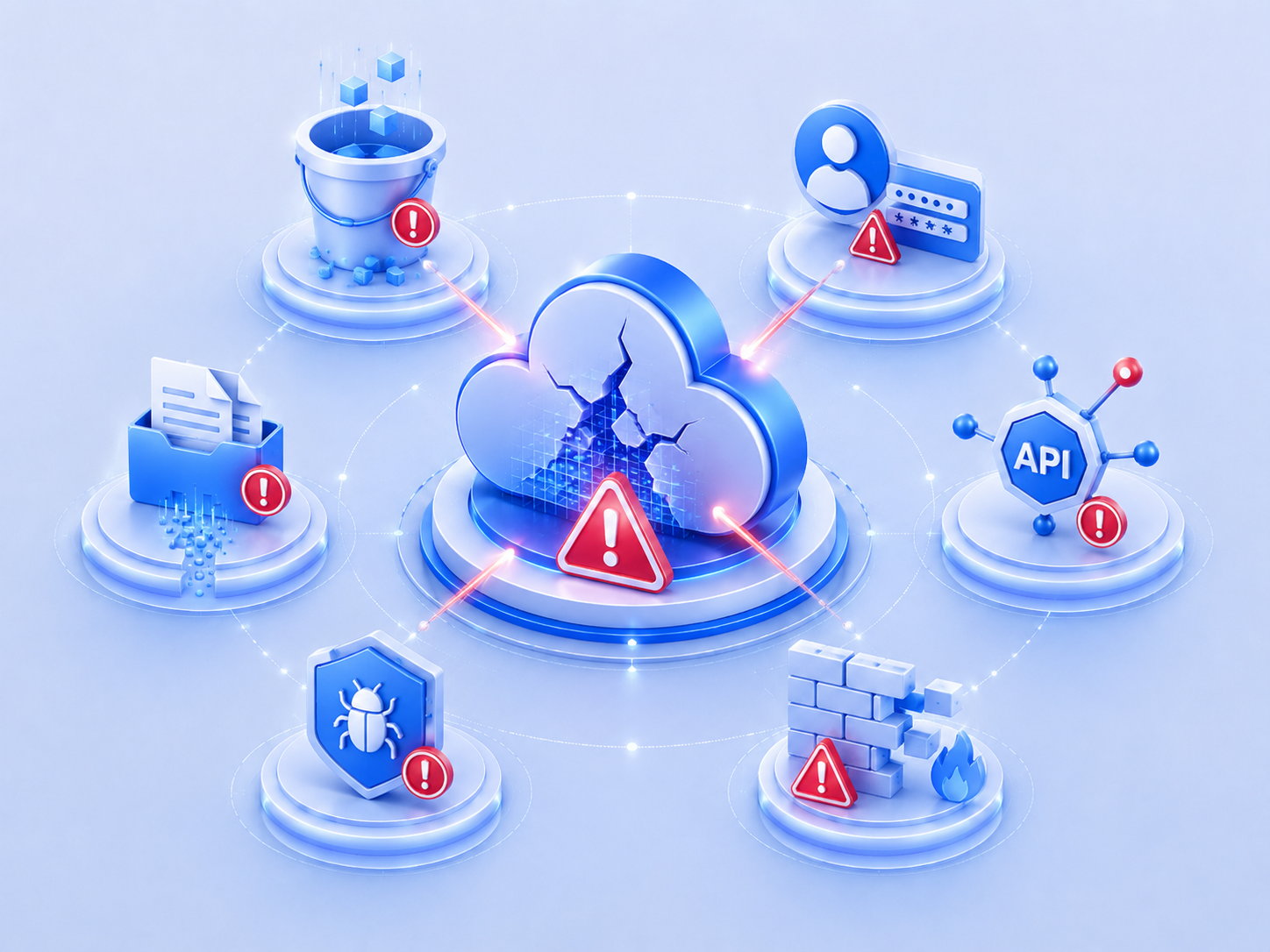
☁️ Cloud Misconfigurations – Identify insecure defaults, exposed services, disabled safeguards, and unsafe resource configurations.
🔐 Excessive IAM Permissions – Detect broad roles, unused privileges, weak policies, and unnecessary administrative access.
🔗 Federation & Trust Weaknesses – Identify unsafe cross-account roles, identity federation, tenant trust, and role chaining.
📂 Cloud Data Exposure – Detect public storage, insecure databases, weak encryption, exposed backups, and uncontrolled sharing.
🌐 Network & Segmentation Gaps – Identify unrestricted traffic, exposed interfaces, weak boundaries, and unauthorized communication paths.
🔑 Secrets, API & Control-Plane Risks – Identify exposed keys, tokens, metadata abuse, insecure APIs, and administrative weaknesses.

☁️ Reduced Cloud Exposure – Identify exploitable weaknesses before attackers compromise cloud resources.
🔐 Stronger Identity Security – Reduce excessive permissions, account compromise, token abuse, and privilege escalation.
📂 Improved Data & Workload Protection – Protect storage, databases, backups, secrets, applications, and cloud workloads.
🛡️ Validated Security Controls – Verify the effectiveness of IAM, segmentation, encryption, monitoring, and workload protection.
🎯 Faster Risk Reduction – Prioritize remediation according to exploitability, exposure, criticality, and business impact.
Cloud Penetration Testing is an authorized assessment that simulates realistic attacks against cloud identities, infrastructure, workloads, storage, networks, APIs, and platform services to determine whether security weaknesses can be exploited.
A cloud security assessment identifies configuration and control weaknesses. Penetration testing goes further by safely exploiting approved findings, validating privilege escalation, tracing attack paths, and demonstrating potential business impact.
CliffGuard tests AWS, Microsoft Azure, Google Cloud Platform, private cloud, hybrid cloud, and interconnected multi-cloud environments.
Yes. We assess users, roles, policies, service accounts, access keys, tokens, trust relationships, privileged permissions, authentication controls, and possible privilege-escalation paths.
Testing is carefully scoped, authorized, and controlled to minimize operational risk. Potentially disruptive techniques are coordinated in advance and performed only when explicitly approved.
Deliverables include an executive summary, validated findings, severity ratings, affected resources, attack narratives, evidence, proof of concept, remediation guidance, compliance references, and retesting results.
CliffGuard combines manual-first testing, multi-cloud expertise, IAM exploitation, attack-path analysis, infrastructure security, and practical remediation support to deliver accurate and business-focused cloud penetration testing.
Cloud risk cannot be understood through configuration reviews alone. CliffGuard combines cloud penetration testing, IAM exploitation, attack-path analysis, and remediation validation to demonstrate real exposure, verify defensive controls, and create a clear path toward stronger enterprise cloud resilience.
Gain a clear, executive-level view of exploitable cloud risk across your enterprise. CliffGuard identifies attack paths, validates control weaknesses, demonstrates business impact, prioritizes high-risk remediation, and provides a practical roadmap for measurable and sustainable cloud security improvement.