











Connected Systems
Secured by CliffGuard
OT, ICS, and IoT environments connect PLCs, HMIs, SCADA platforms, sensors, embedded devices, industrial protocols, cloud services, and enterprise networks. Weak segmentation, insecure firmware, exposed engineering interfaces, and unauthenticated commands can disrupt production, alter physical processes, or compromise safety.
CliffGuard’s OT/ICS & IoT Security Testing Services assess industrial systems and connected-device ecosystems from the network layer to the device hardware. Our safety-first methodology combines passive analysis, protocol testing, firmware review, hardware-interface assessment, and controlled exploitation without unnecessarily disrupting operations.
OT/ICS Security Testing evaluates industrial control systems, operational networks, engineering workstations, controllers, supervisory systems, remote-access paths, and supporting infrastructure for exploitable weaknesses.
IoT Security Testing assesses connected devices, embedded software, firmware, communication protocols, mobile applications, cloud services, APIs, and device-management platforms across the complete product ecosystem.
CliffGuard applies safety-conscious testing, passive discovery, manual validation, and controlled exploitation to identify genuine attack paths while respecting operational availability, production constraints, and approved testing boundaries.
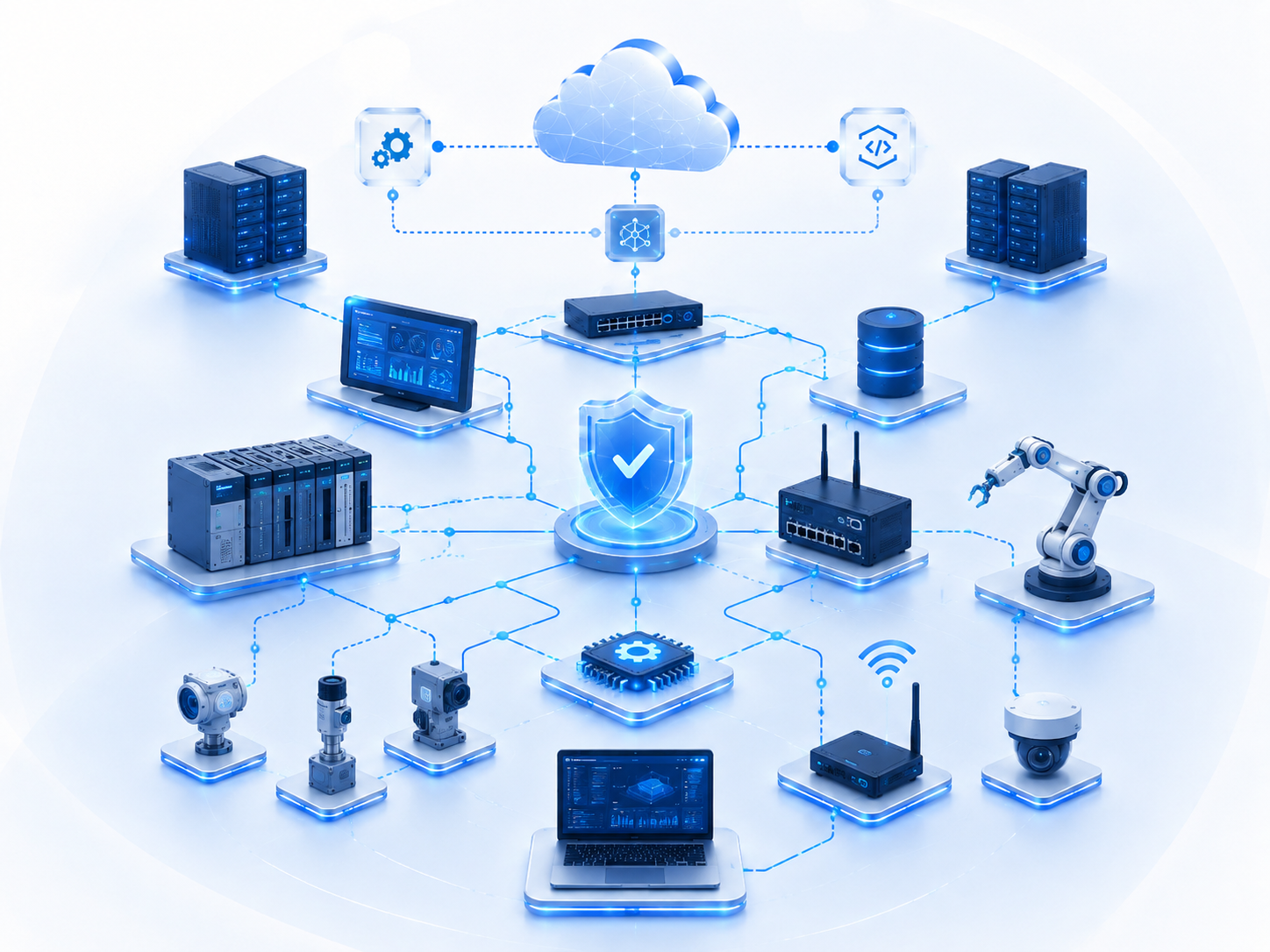
🏭 OT Architecture & Network Testing – Assess zones, conduits, segmentation, firewalls, remote access, industrial networks, and trust relationships.
⚙️ Industrial System Security Testing – Evaluate SCADA, DCS, PLCs, HMIs, historians, engineering workstations, gateways, and management systems.
📡 Industrial Protocol Assessment – Test Modbus, DNP3, OPC, BACnet, MQTT, field protocols, and insecure communication patterns.
🔧 IoT Device & Firmware Testing – Assess firmware, boot processes, storage, debug interfaces, hardware ports, credentials, and update mechanisms.
☁️ IoT Application & Cloud Testing – Evaluate mobile apps, web portals, APIs, wireless communication, cloud platforms, and device-management services.
🎯 Attack-Path & Control Validation – Validate identity abuse, lateral movement, device compromise, monitoring visibility, and operational impact.
Define critical processes, equipment dependencies, authorized assets, prohibited actions, maintenance windows, recovery procedures, and operational contacts. Establish clear rules of engagement for safe testing.
Passively identify controllers, HMIs, engineering stations, IoT devices, protocols, firmware versions, network relationships, remote-access services, and external communication paths.
Review segmentation, protocol behavior, device identity, firmware components, hardware interfaces, cloud integrations, cryptographic controls, update mechanisms, and administrative trust relationships.
Validate approved weaknesses in laboratory, staging, maintenance-window, or carefully controlled production conditions. Test unauthorized commands, access bypass, firmware flaws, exposed interfaces, and device-control pathways.
Deliver technical evidence, operational impact, risk ratings, compensating controls, and prioritized remediation guidance. Retest corrected weaknesses to confirm security improvement without affecting reliability.
🏭 Weak IT/OT Segmentation – Identify unrestricted communication, unsafe firewall rules, flat networks, and unauthorized industrial access paths.
🔐 Insecure Remote Access – Detect exposed gateways, weak VPN controls, shared accounts, vendor access, and unmanaged remote connectivity.
⚙️ Legacy & Vulnerable Systems – Identify unsupported platforms, weak configurations, known vulnerabilities, and difficult-to-patch industrial assets.
📡 Insecure Industrial Protocols – Detect cleartext communication, missing authentication, command manipulation, spoofing, and protocol abuse.
🔧 Firmware & Device Weaknesses – Identify hardcoded credentials, insecure boot, exposed debug ports, weak updates, and extractable secrets.
☁️ IoT Ecosystem Exposure – Detect vulnerable APIs, cloud services, mobile applications, wireless interfaces, and device-management platforms.
🎯 Unauthorized Process Manipulation – Validate whether attackers could alter commands, sensor values, device behavior, or operational workflows.
🚨 Monitoring & Response Blind Spots – Expose missing asset visibility, weak logging, ineffective alerts, and limited incident-response readiness.


🏭 Operational Resilience – Reduce cyber risks that could interrupt production, utilities, logistics, or essential services.
🛡️ Improved Safety Assurance – Identify weaknesses capable of affecting physical processes, equipment behavior, or safety.
🔍 Deeper Asset Visibility – Discover unmanaged devices, firmware, protocols, and communication paths.
🧱 Validated IT/OT Isolation – Validate zones, firewalls, jump servers, and remote access controls.
📡 Secure Connected Products – Address hardware, firmware, API, cloud, and wireless weaknesses before deployment.
Depending on the authorized environment, testing may cover Modbus/TCP, DNP3, OPC UA, IEC 60870-5-104, EtherNet/IP, PROFINET, MQTT, and other proprietary or industry-specific protocols.
Yes. Testing can include firmware extraction, binary analysis, hardcoded-secret discovery, update validation, secure-boot review, and assessment of UART, JTAG, SWD, storage, and debug interfaces.
Yes, when authorized and operationally appropriate. We prioritize passive techniques and restrict active validation to approved assets, laboratory systems, maintenance windows, or carefully controlled production conditions.
We assess firewalls, industrial DMZs, jump servers, VPNs, Active Directory relationships, vendor access, cloud connections, and other pathways that could enable movement into OT environments.
Testing may cover the physical device, firmware, operating system, wireless communication, mobile application, web portal, backend APIs, cloud platform, identity controls, and update infrastructure.
Assessments may align with IEC 62443, NIST SP 800-82, NIST CSF, MITRE ATT&CK for ICS, OWASP IoT guidance, ETSI IoT security principles, and ISO 27001.
CliffGuard combines industrial protocol expertise, firmware reverse engineering, hardware testing, IT-to-OT attack analysis, and connected-product security to deliver technically deep assessments without compromising operational safety.
Industrial and connected-device security requires deeper testing than conventional vulnerability scanning. CliffGuard analyzes protocols, firmware, hardware interfaces, segmentation, device identities, and cloud-control paths to expose weaknesses that could affect physical operations.
Gain clear visibility into application code risk. CliffGuard identifies security weaknesses, validates findings, prioritizes remediation, and helps development teams build more secure and resilient software.